

Non-Amino Flue Gas Treatment
The SNAR technology, which stands for Selective Non-Amination Reduction Acid Removal and Denitrification, represents an innovative approach for clean flue gas treatment.
This technology operates under medium to low temperature conditions, and its core principle lies in the fact that a dedicated reducing agent enters the flue gas and undergoes pyrolysis to generate strongly reducing substances,
Efficiently and stably reduce NOx in flue gas to harmless N₂, H₂O, and CO₂, while efficiently removing SO₃ from the flue gas,
This has solved the problems of secondary pollution and blue smoke tailing caused by ammonia slip in traditional denitrification technology,
Achieved cleaner and more environmentally friendly flue gas emissions.
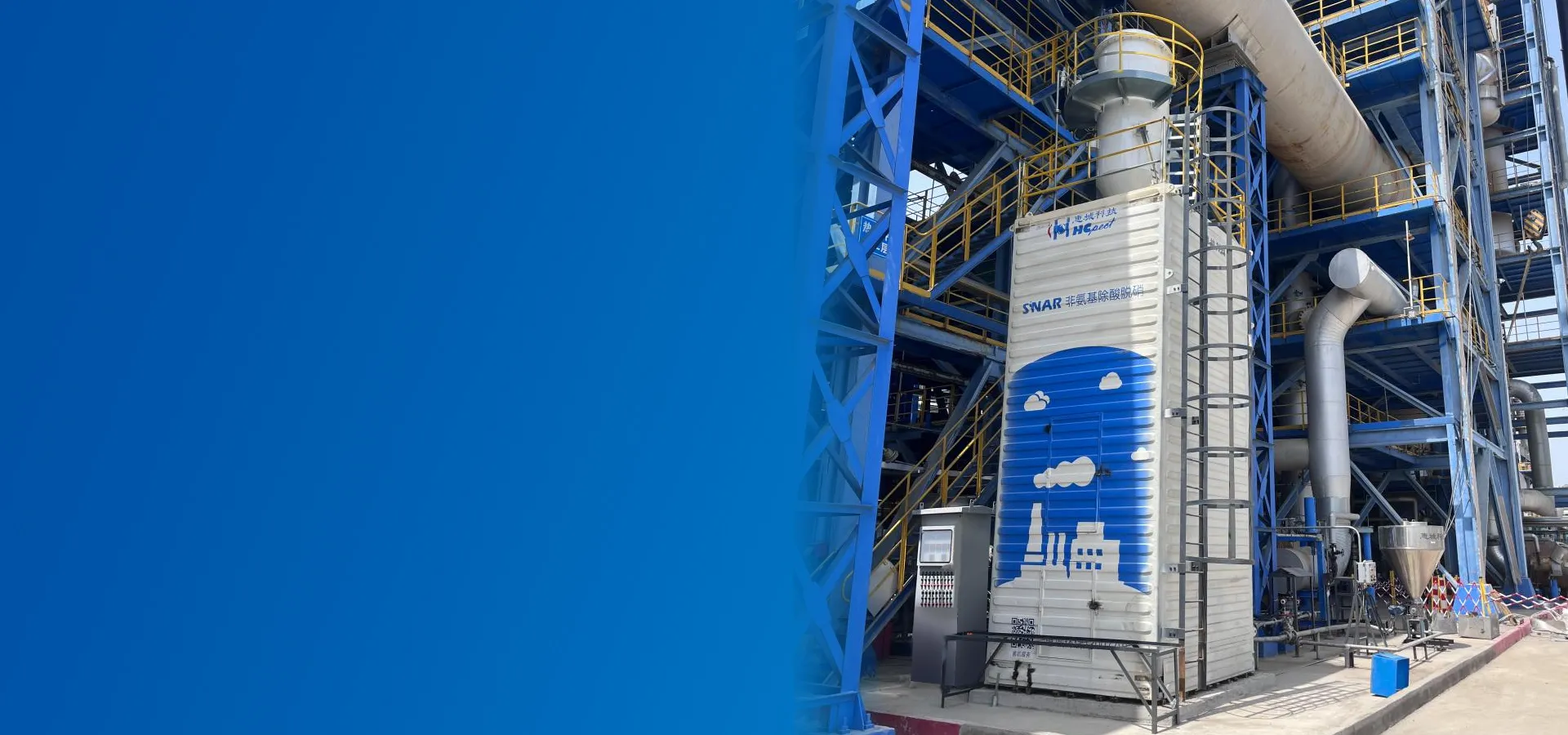
 High efficiency in acid removal and denitration (patented technology)
 The equipment is designed with modularity, utilizing a containerized skid-mounted approach, featuring high integration, small footprint, convenient transportation and installation, and strong adaptability
 It can quickly connect with customer devices and supports online insertion of spray guns, eliminating the need for customer devices to be shut down or discontinued, significantly reducing the difficulty and cost of modification
 The "one for use, one for standby" feeding system ensures continuous and stable agent supply, with precise and flexible adjustment of feeding quantity to match the working conditions
 Compared to SCR technology, it saves over 70% of equipment investment, and compared to SNCR technology, it has a lower temperature window and a higher denitrification rate
 Solid reducing agents are non-toxic, harmless, and non-flammable, making them safe for transportation
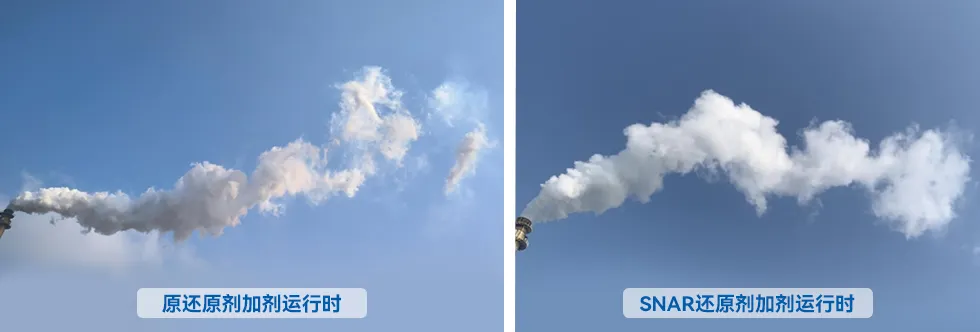
The SNAR non-amino reduction acid removal and denitration technology can achieve a NOx removal rate of 50%-80% within the temperature window of 600-850℃. When used in conjunction with SCR beds, the NOx removal rate can be further increased to 60%-90%. Additionally, this technology can reduce SO3 in flue gas to SO2, with a reduction conversion rate of up to 40%-70%. The generated SO2 is easier to be removed by wet desulfurization devices. This technology can effectively solve the problem of excessive particulate matter emissions caused by sulfuric acid aerosols and significantly eliminate the visual pollution phenomenon of "blue smoke trailing".